
PelletLab G20.
Develop formulations.
Make more of your material.
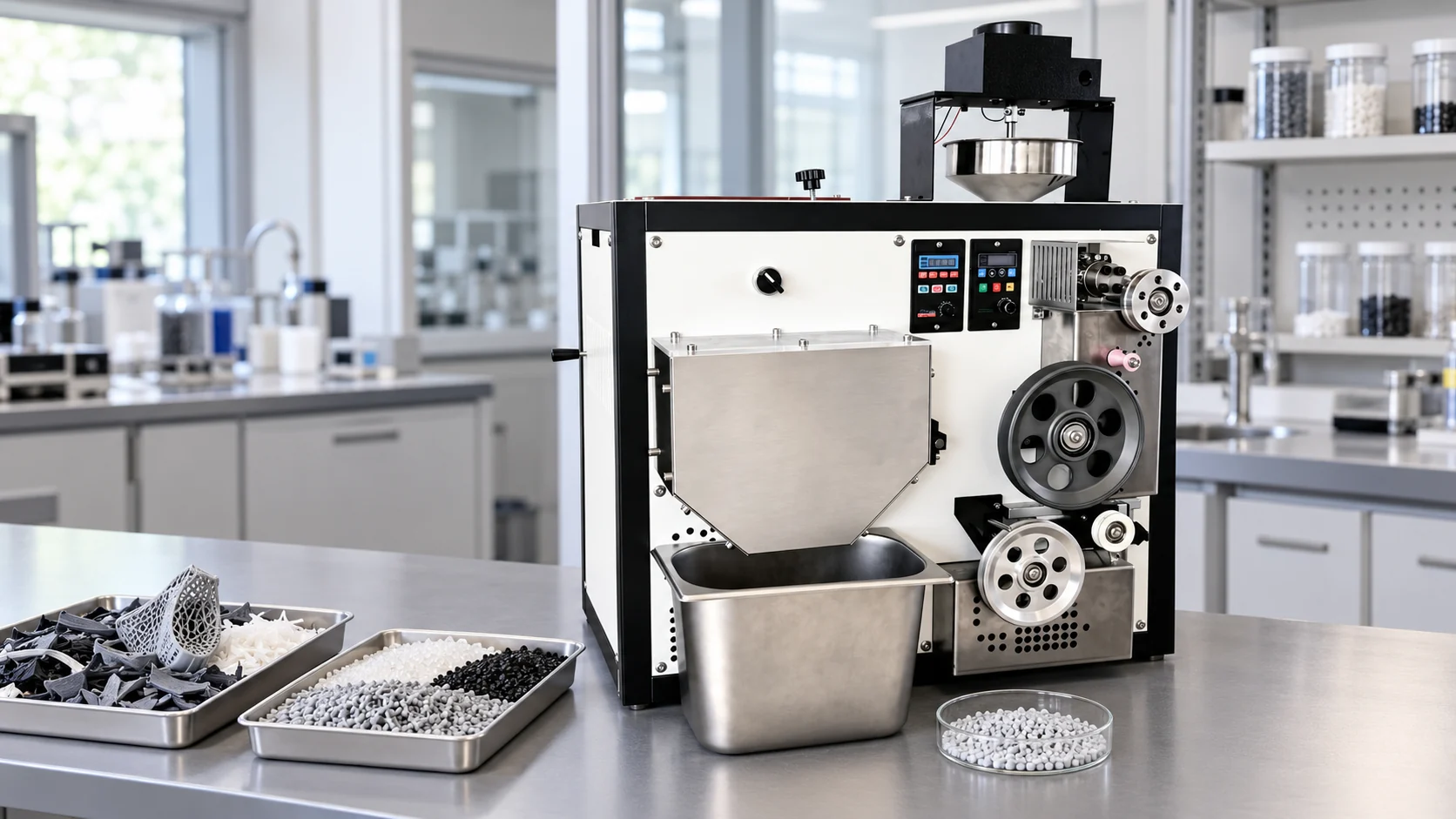
Prepare test pellets for modified-material R&D and explore a second life for suitable 3D-print scrap. G20 combines single-screw extrusion, air cooling and strand cutting on a laboratory workbench. Sorted, shredded thermoplastic scrap can be assessed for re-melting and re-pelletizing, helping return usable material to future trials.
AVAILABLE FOR QUOTATIONMaterial preparation, suitability, configuration and delivery lead time are reviewed for each quotation.
Pellet preparation
at laboratory scale.
Use pelletizing where your research workflow needs material in pellet form. Define the formulation, target pellet dimensions and downstream use before choosing the configuration.
Modified-material R&D
Prepare test pellets from suitable pre-blended or pre-compounded formulations for downstream material evaluation.
Research & education
Bring extrusion, cooling and cutting into a compact setup for documented laboratory work.
3D-print scrap trials
Assess clean, known thermoplastic print waste as a prepared feedstock for re-melting and pelletizing.
Use a load-rated bench and suitable handling equipment. Listed dimensions are approximately 800 × 500 × 700 mm; packed weight is approximately 70 kg, including the wooden crate.
Formulation trials.
Material reuse.
One compact pelletizing stage can support both new formulation research and selected scrap-recovery experiments.
01 / Develop modified materials
Start with a defined polymer grade and a suitable pre-blended or pre-compounded formulation. Turn the prepared feedstock into trial pellets for extrusion, molding, printing or other evaluation. Share the additive or filler type and loading so we can review whether the G20 configuration suits your research.
02 / Re-pelletize suitable print waste
Separate known, compatible thermoplastic print scrap, then shred and dry it as the grade requires. Assess re-melting and cutting it into new pellets for further trials. This route can help keep usable material in your development loop and reduce discarded trial material.
Scrap sorting, size reduction and drying are separate preparation steps; G20 does not perform them. Mixed or contaminated waste, material degradation, processing conditions and the properties of reused pellets require case-by-case evaluation. The image above is an illustrative composite based on a real G20 equipment photo.
One desktop system.
Four connected stages.
Single-screw extrusion
Feed suitable material through the SJ16 extrusion module and die.
Air cooling
Cool the strand before it reaches the cutting stage.
Strand pelletizing
Guide the strand into the cutter to form pellets.
Sample collection
Collect pellets for identification and your next processing or evaluation step.
G20 uses a right-to-left process layout and a nominal line centre height of 400 mm. Review access, ventilation and sample handling as part of installation planning.
See the machine.
Follow the pellets.
See our PelletLab G20 in operation.
See the operator display, extrusion and strand-handling components, cutting enclosure and collected pellets in this equipment demonstration.
- 01Equipment and controls
- 02Strand handling and cutting
- 03Collected pellets
28 seconds · Equipment demonstration · Original playback speed
Sound-free web edition. Shown equipment and screen readings illustrate this demonstration; they do not establish guaranteed production results.
PelletLab G20 demonstration · English scene captions
PelletLab G20
Technical Specifications
Use these figures to begin your equipment discussion. Output and processing settings depend on material and operating conditions; the quoted configuration is confirmed before ordering.
| Output | Approx. 0.1–2 kg/h |
|---|---|
| Reported pellet length | Approx. 2.85–3 mm |
| Extruder | SJ16 single-screw extrusion module |
| Screw diameter | 16 mm |
| Screw L/D | 16:1 |
| Maximum screw speed | 30 rpm |
| Maximum heating temperature | 450°C |
| Heating zones | 3 |
| Main motor power | 400 W |
| Heating power | 320 W |
| Cooling | Air cooling |
| Power supply | 220V or 110V / 50 Hz / single phase |
| Process direction | Right to left |
| Nominal line centre height | 400 mm |
| Machine dimensions | Approx. 800 × 500 × 700 mm |
| Packed weight | Approx. 70 kg, including wooden crate |
| Screw and barrel treatment | Nitrided and polished |
The nominal pellet length is approximately 2.85–3 mm. This is not a published full adjustment range or a pellet-diameter tolerance. Tell us the diameter and length you require so the die and cutter setup can be reviewed.
Download technical overview ↓Explore suitable
thermoplastic formulations.
Material families for application review
Material suitability depends on the grade and formulation. Share grade, additives, filler loading, feedstock form and processing guidance. Filled formulations, including wood-plastic composites, need a specific application review. The 450°C equipment maximum is not a material processing recipe.
A closer look
at the desktop system.
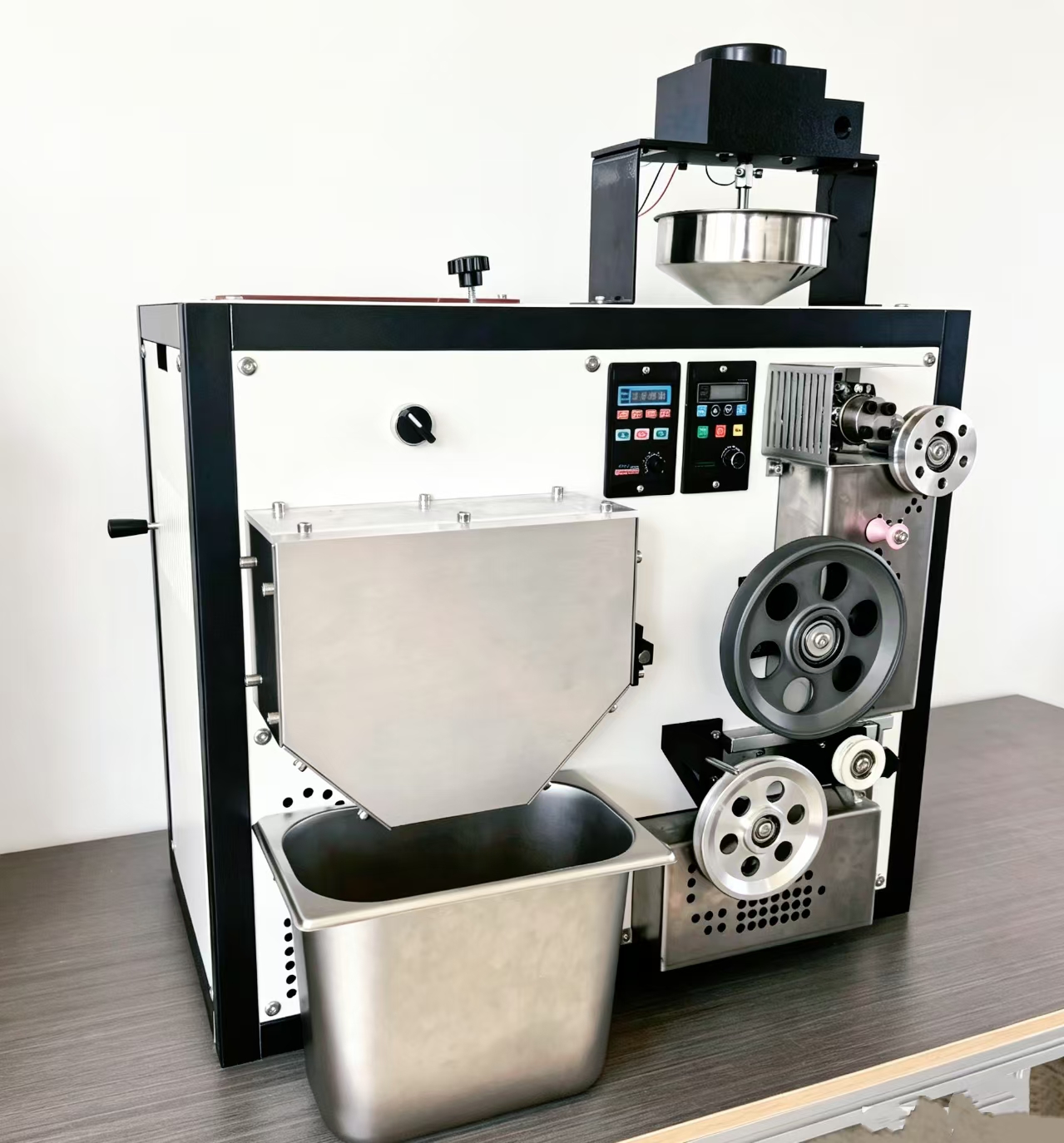
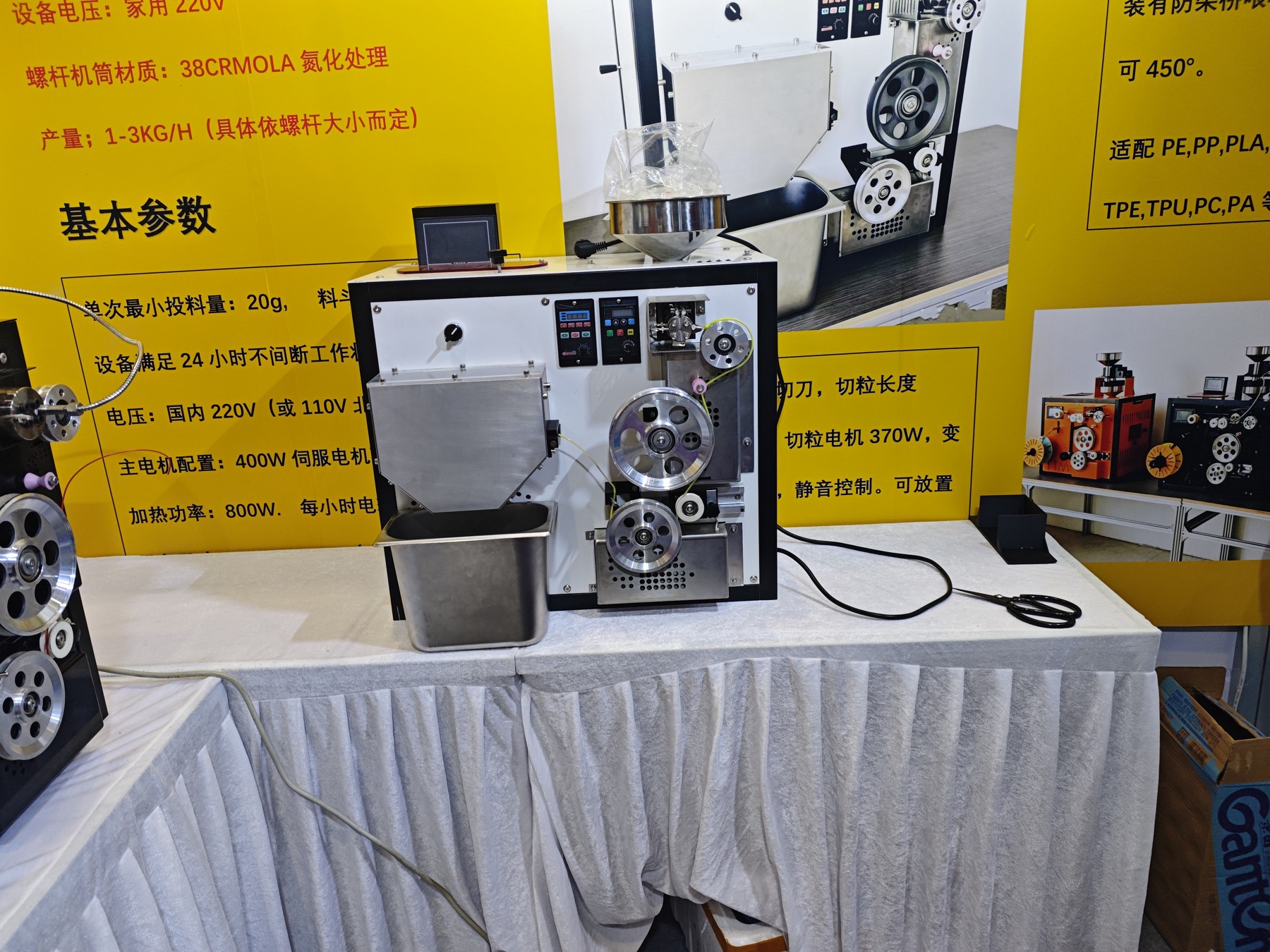
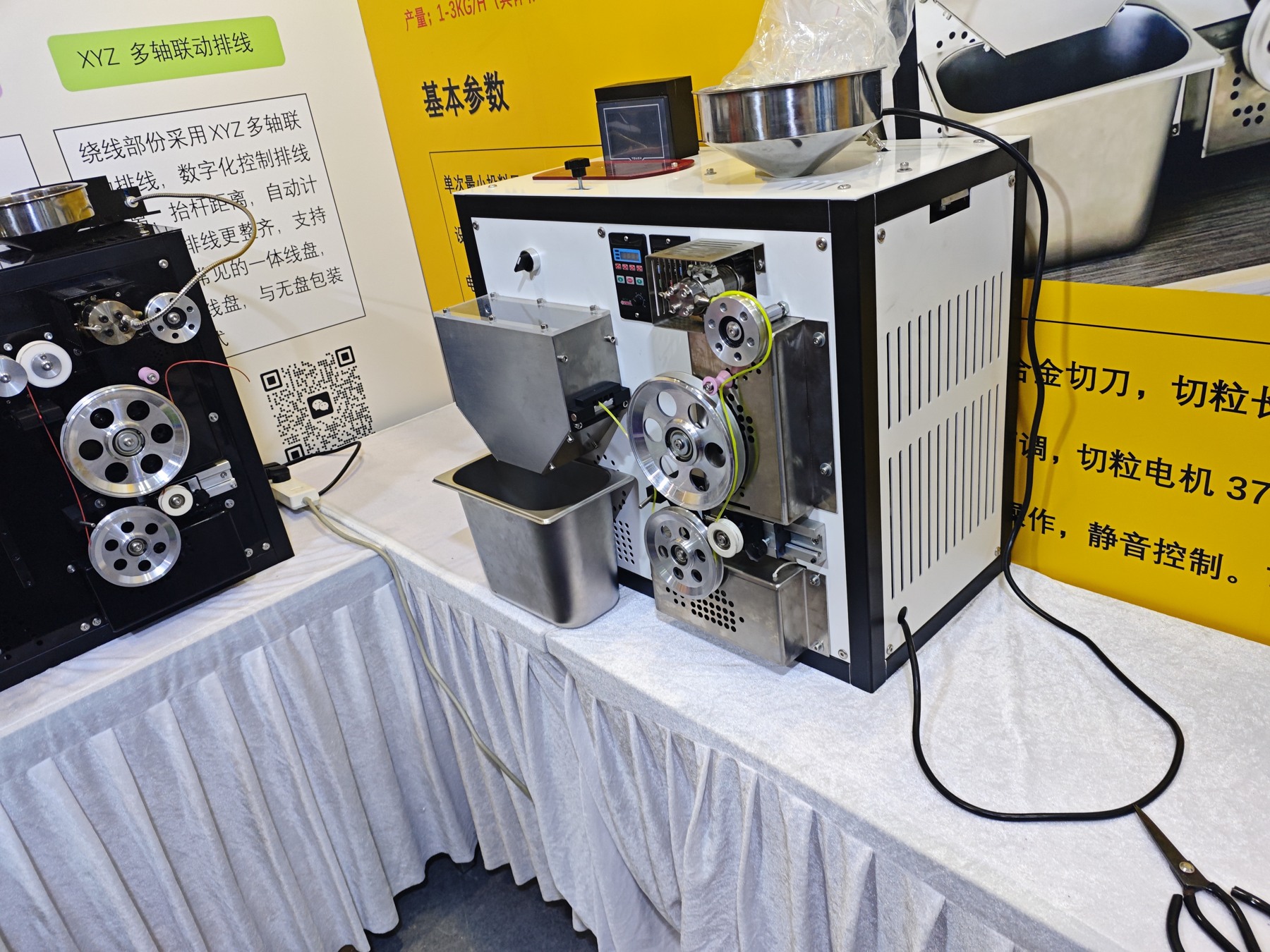
PelletLab G20 on the workbench and at an exhibition. We confirm the controls and included components in your quotation.
Questions to discuss.
Can I request a quotation now?
Yes. PelletLab G20 is available for quotation. Include your material, required pellet dimensions, trial quantity, destination and power supply so we can review the configuration and delivery lead time.
What is the smallest batch or full pellet-size range?
Tell us your target batch quantity and pellet dimensions. Our team will review the die, cutting setup and operating requirements for your application.
Which controls and power supply will be included?
G20 power options are 220V or 110V, 50 Hz, single phase. Confirm the electrical version, controller configuration and included components during quotation.
Tell us what
you need to pelletize.
Include material grade, feedstock, pellet diameter and length, output, power supply and delivery destination.
We will review technical suitability, configuration and commercial details with you.